
Jim Wells County Criminal History Checks
Begin with the record question. Current custody belongs with the Jim Wells County Sheriff; a felony case belongs with the District Clerk and 79th District Court; a Class A or B misdemeanor generally belongs at county level; and a fine-only city case stays with the relevant municipal court. The Texas Department of Public Safety, or DPS, supplies the statewide public conviction and deferred-adjudication search. These sources overlap, but none replaces the others. Full name, date of birth, spelling variants, an incident or cause number, and an approximate date make a Jim Wells County record search far more precise.
The official Jim Wells County directory shows how clerk and court functions are divided. Its layout is useful before calling or visiting.
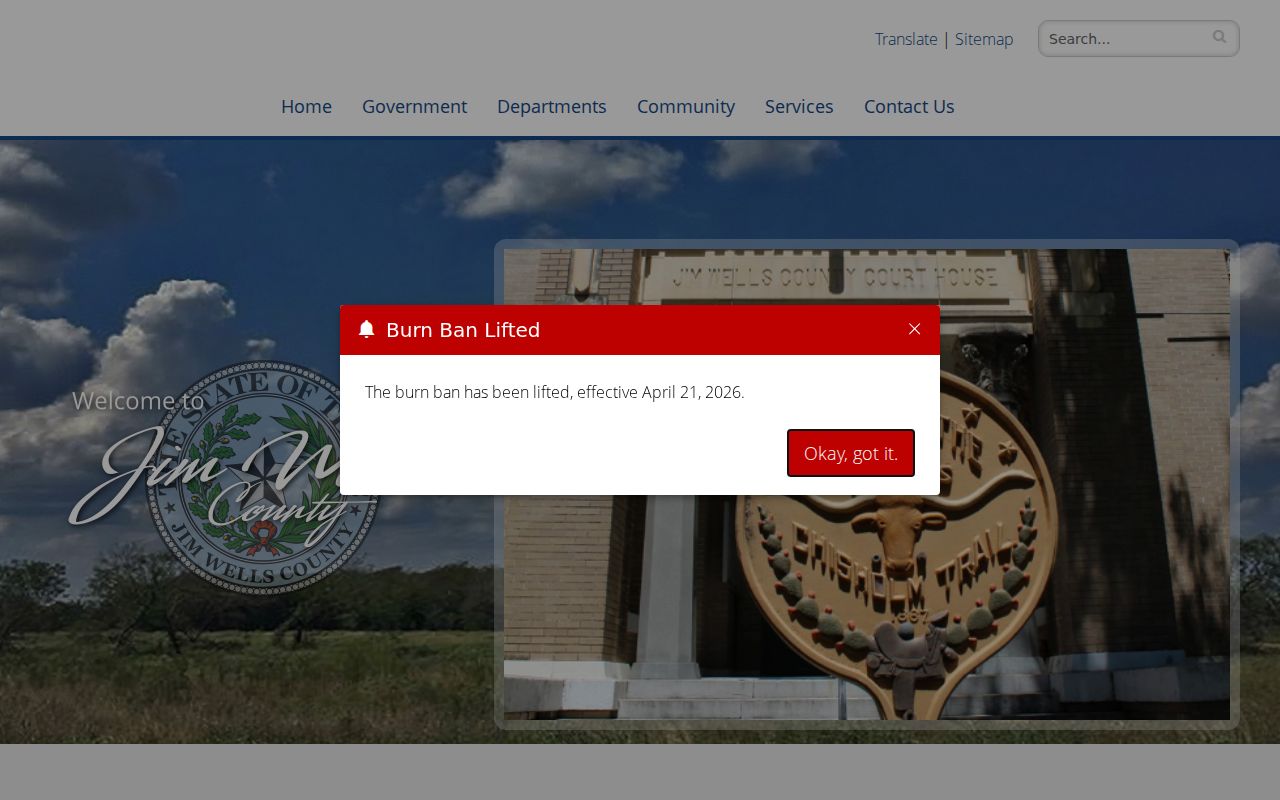
The county directory confirms that court records do not all sit at one counter. Use this order:
- Identify whether the event is a police report, booking, court case, statewide history, warrant, or supervision record.
- Search with the narrowest reliable identifier, preferably a cause, citation, booking, or incident number.
- Match the name with date of birth, court, filing date, and charge before treating the result as relevant.
- Request the underlying report, charging instrument, judgment, dismissal, or booking sheet from its custodian.
- For your own identity-based Texas review, use FAST fingerprints when a name result is uncertain.
Why Jim Wells County Records Split
Alice is the county seat, but location does not make the county the owner of every record. Alice Police Department keeps its incident reports. Premont and Orange Grove keep their city police material. The sheriff holds reports created by sheriff personnel and the jail's intake records. Court clerks keep filed complaints, informations, indictments, orders, judgments, and dockets. Sending an Alice police-report request to a county clerk will not produce the report, just as asking the sheriff for a certified felony judgment will not replace a District Clerk request.
The split also follows court jurisdiction. The 79th Judicial District serves Jim Wells and Brooks Counties and hears Jim Wells felony matters through the Jim Wells District Clerk. County-level misdemeanor files follow local County Court at Law assignments. Municipal and justice courts retain fine-only matters within their own jurisdiction. Check the court name printed on a notice before choosing a records office.
Note: A court heading that mentions the two-county 79th District does not move a Jim Wells filing into Brooks County custody.
Official Background Checks in Texas
The Texas DPS Crime Records Division administers the Computerized Criminal History system. Its public Criminal History Conviction Name Search covers reported Texas convictions and deferred adjudications. The current portal states that an initial search uses a $1 credit, including a no-match result. Card purchases add 2.25 percent per credit and $0.25 per transaction. A name and birth-date search can return a similar person or miss the intended record, so it should not be described as a fingerprint match or a complete FBI history.
The DPS service hub gathers the state's official criminal-history routes in one place.
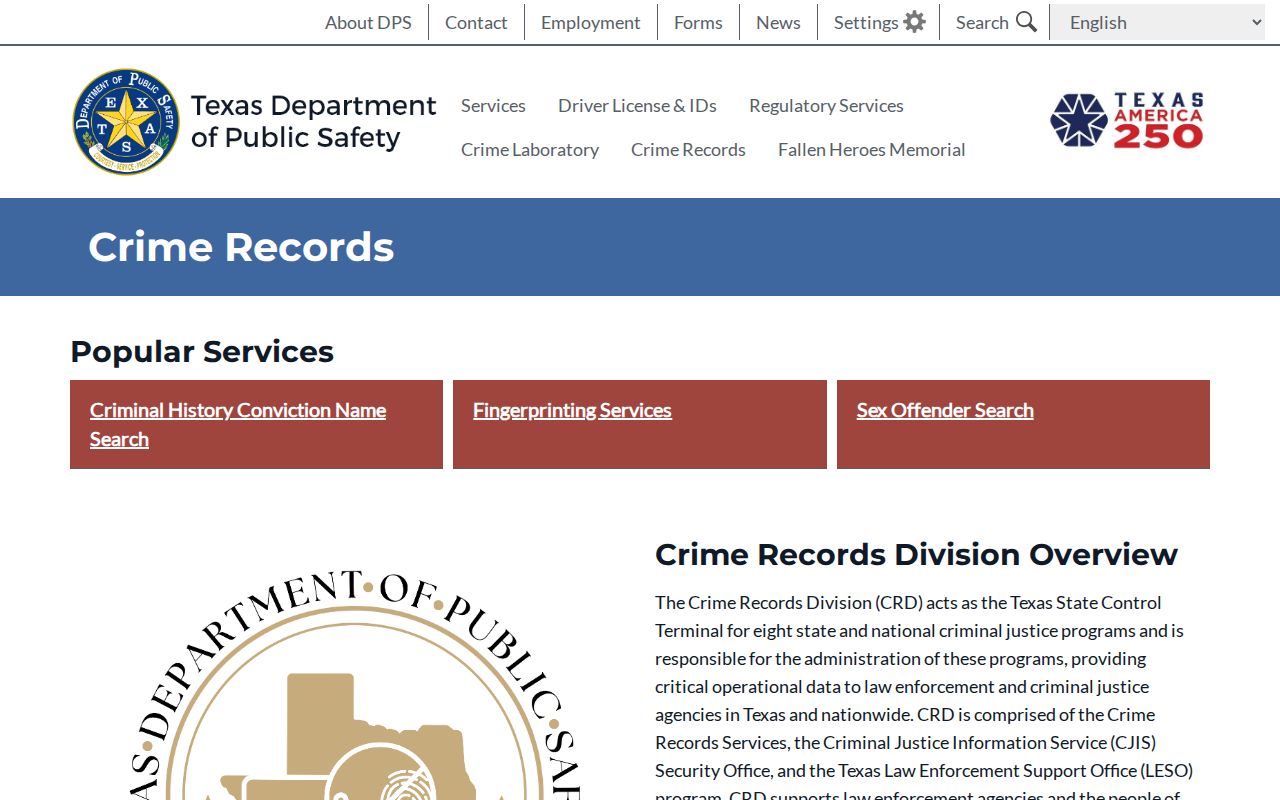
For review of your own Texas history, DPS directs applicants to Texas Fingerprint Applicant Services of Texas, or FAST, through IdentoGO. Research lists a $15 DPS record-review fee plus a $10 FAST fingerprint fee, but the service code and displayed total should be checked when booking. DPS calls fingerprint comparison the more accurate identity method. The FBI Identity History Summary is another fingerprint-based self-review product, but it answers a federal identity-history question rather than supplying Jim Wells County court documents.
| Official product | Best use | Published cost detail |
|---|---|---|
| DPS public name search | Reported Texas convictions and deferred adjudications | $1 initial credit, plus stated card charges |
| DPS FAST self-review | Your own fingerprint-matched Texas history | $15 DPS plus $10 FAST in the researched DPS source |
| Local clerk copy | Filed charge, docket, judgment, or certified disposition | Ask the clerk for a current quote |
Three Jim Wells County Record Layers
One event can create three distinct Jim Wells County criminal records. The jail booking documents custody. The clerk's case file documents what prosecutors filed and how the court ruled. DPS connects fingerprint-supported arrest cycles with outcomes reported by law enforcement, prosecutors, courts, and supervision departments. A booking may appear before any case is filed. A filed charge may differ from the arrest label. A DPS entry may lag behind a signed dismissal or judgment when a disposition has not yet reached the repository.
Use the chain as a check: Arresting agency report → Sheriff booking → Prosecutor filing decision → Clerk case file → DPS reported history. A release from jail does not mean dismissal. A dismissal does not erase the earlier arrest or booking on its own. Expunction or nondisclosure depends on separate Texas law and a qualifying court process.
| Record | Custodian | What it proves |
|---|---|---|
| Booking record | Jim Wells County jail | Custody intake, charge or hold, bond and status at that time |
| Criminal case file | Correct trial court clerk | Filed accusation, docket events, disposition and sentence |
| DPS history | Texas DPS | Reported identity-linked arrest cycles and outcomes within product limits |
Kinds of Criminal Records
Jim Wells County criminal records take their meaning from who made them. An incident report records an agency's investigation. An arrest record describes the seizure and alleged offense, while a booking record documents jail intake. Prosecutors create or present charging documents. The clerk maintains the docket and disposition. DPS assembles reported criminal-history events. Warrants come from courts and are tracked by law enforcement, and corrections or supervision agencies keep separate custody, probation, and parole files.
- Police and sheriff reports: narratives and event details held by the investigating agency.
- Arrest and booking records: event and custody data that do not establish guilt.
- Court case files: charges as filed, motions, settings, judgments, dismissals, and sentences.
- Warrant records: court-issued process that must be confirmed with the issuing court or sheriff.
- State records: DPS history, TDCJ custody, parole, and registry information within each system's limits.
A portal line is often only an index. Obtain the source document when the exact charge, outcome, or legal status matters.
Jim Wells County Booking Search
The sheriff's current-roster route is the first official stop for recent Jim Wells County custody. It is a snapshot, not an arrest archive or conviction list. During research, the roster endpoint returned an error. That makes the sheriff's main line at 361-668-0341, the county public-information form, and the official VINELink route important fallbacks. Ask for public booking or custody details. If a person vanishes from an active list, that may reflect release or transfer rather than the end of a criminal case.
The Jim Wells County Sheriff homepage identifies the current office and links its jail and app services.
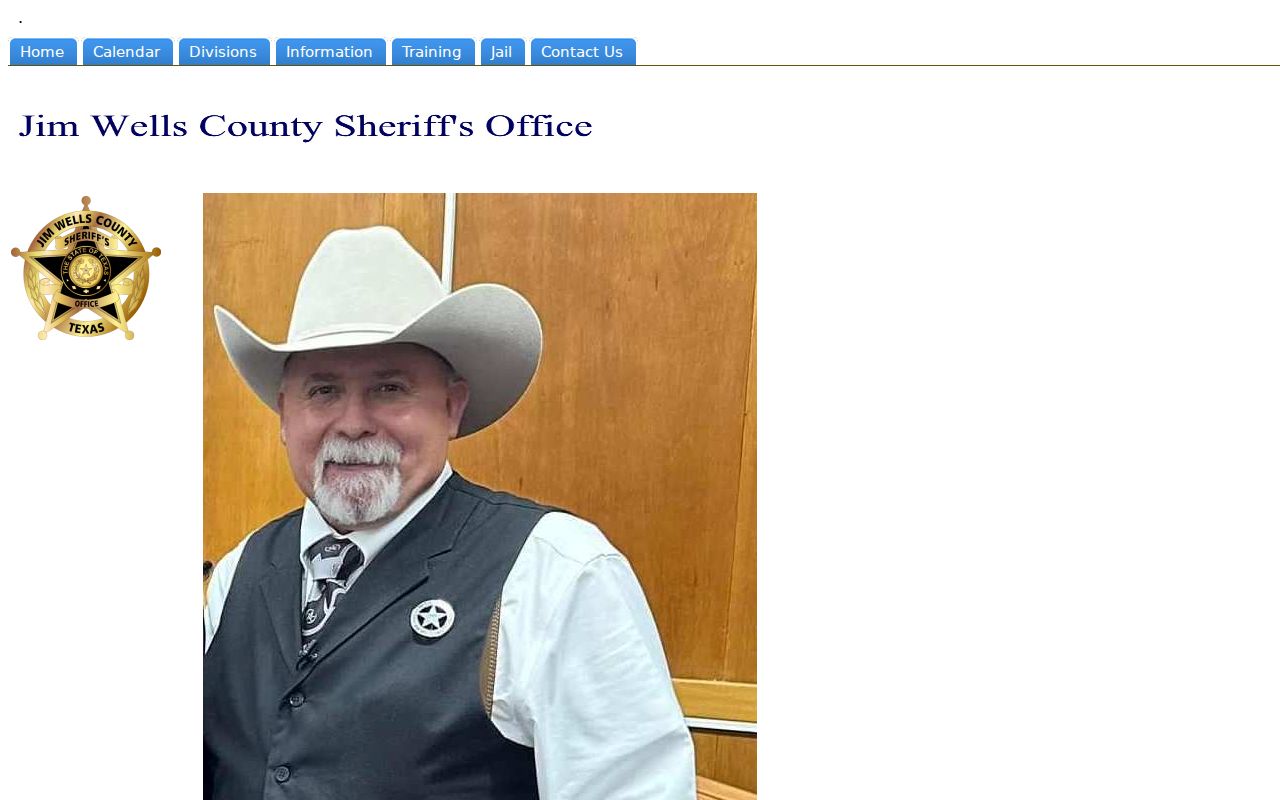
The sheriff's iOS app advertises nonemergency crime reports, tips, interactive tools, and safety news in English, Italian, and Spanish. It is not an emergency channel, and its store description does not promise inmate, warrant, records-request, or registry searches. For a record, use the office or roster route the sheriff actually provides.
Jim Wells County Criminal Records: What They Contain
A complete record is a set of segments, not one fixed sheet. Identity data may include names, aliases, date of birth, physical descriptors, a Texas state identification number, and fingerprint identifiers. The arrest segment can show date, agency, incident identifiers, and alleged offenses. A court segment adds the cause number, filed charge, outcome, and sentence. Custody or supervision events may appear when the responsible agencies report them. Public versions often remove Social Security numbers, full driver-license data, protected victim details, financial identifiers, and juvenile information.
| Name and identifiers | Name, aliases, birth date, physical descriptors, and identity numbers when lawfully released |
|---|---|
| Arrest or booking | Agency, date, event number, custody status, listed charge or hold, and bond data |
| Filed charge | Complaint, information, or indictment, offense level, statute, and cause number |
| Disposition | Pending, dismissed, convicted, acquitted, deferred, no-billed, or transferred as applicable |
| Sentence | Custody, fine, community supervision, restitution, and related court orders |
| Custody or supervision | Jail or TDCJ admission and release, probation, or parole data when publicly supplied |
Note: Match a shortened charge label to the filed instrument before using it to infer the offense class or possible punishment.
Jim Wells County Record Conflicts
Start with the document closest to the fact in dispute. For a court outcome, obtain the signed judgment, dismissal, or certified disposition from the Jim Wells clerk. For booking time or custody, ask the sheriff. For an Alice incident narrative, use Alice Police records. If the local court shows a result that DPS lacks, keep the cause number, disposition date, court name, and certified record together. DPS explains that its repository depends on submissions from Texas criminal-justice agencies, so a reporting lag or identity mismatch can cause a difference.
For your own CCH, a FAST fingerprint review is the sound identity check. It is stronger than trying more name spellings. A person seeking correction should identify whether the source is DPS, the clerk, the arresting agency, the jail, or an old downstream copy, then use that custodian's process. Clearing the court case alone does not guarantee every other system updates at once.
Texas Public Access Laws
The Texas Public Information Act governs executive-branch records held by offices such as a sheriff or police department, but judicial case records follow court access rules. Public access does not mean every field is released. Active-investigation material, juvenile data, confidential identifiers, protected victim information, sealed records, and material covered by a court order may be withheld or redacted. DPS criminal-history dissemination has its own limits, and Chapter 62 controls which sex-offender registry fields are public.
The official Texas Public Information Act text is the source for the state's request and withholding framework.
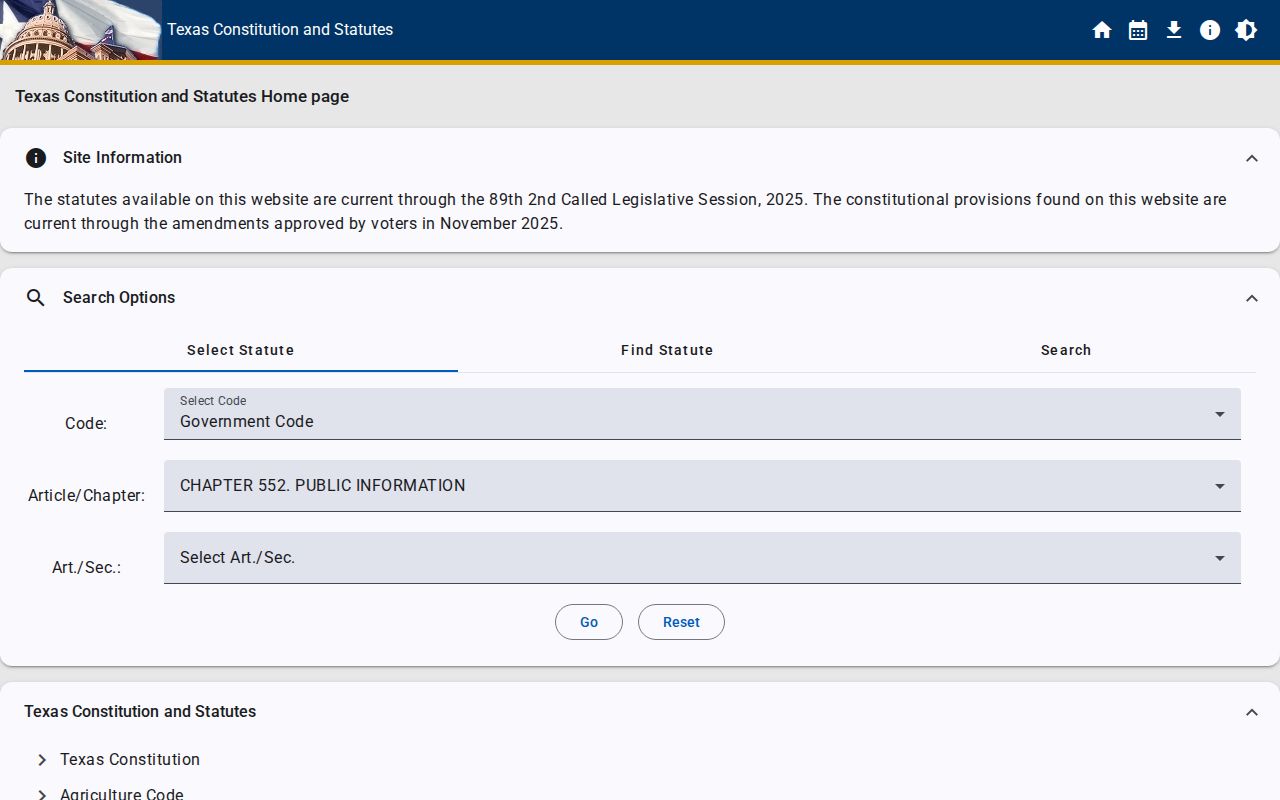
The statute supports access to existing records. It does not require an agency to answer research questions or create a new report.
Key authorities:
Government Code Chapter 552 governs public-information requests and preserves basic arrest information under Section 552.108(c).
Government Code Chapter 411 controls criminal-history access, public conviction dissemination, and nondisclosure.
Code of Criminal Procedure Chapter 66 sets criminal-history reporting duties.
Code of Criminal Procedure Chapter 55A governs expunction.
Request Jim Wells County Sheriff Records
The sheriff publishes a main office route rather than a separate records-division portal. Address a precise request to the records or public-information function at P.O. Box 1286, Alice, Texas 78333, call 361-668-0341, or fax 361-668-0569. Name the existing record: offense report, arrest report, booking sheet, jail log entry, dispatch record, 911 audio, or body-camera recording. Add the incident number, narrow date and time, location, involved agency, and desired format. For body-camera material, Texas law calls for a specific date and approximate time, location, and a known subject's name.
Jim Wells County also provides a one-page public-information request form. It may be mailed or delivered to the Record Request Department at 200 N. Almond Street, Alice, Texas 78332, or faxed to 361-661-1372. The form asks which office holds the information and offers email, mail, pickup, fax, or inspection choices. No fixed local fee or response time appears on the form, so request a written estimate before chargeable work.
Restricted, Sealed & Expunged Records
Texas separates expunction from nondisclosure. Expunction under Code of Criminal Procedure Chapter 55A can direct special handling, removal, or destruction of qualifying arrest records. Nondisclosure under Government Code Chapter 411 restricts public release of qualifying criminal-history information but preserves access for criminal-justice and other listed entities. Neither remedy happens just because time passed, a person finished supervision, or a case was dismissed.
Eligibility depends on the outcome, history, waiting rules, and venue. Jim Wells County does not publish a local expunction packet or filing fee in the researched sources. Confirm whether the District Clerk or County Clerk receives the petition based on the underlying case and current Chapter 55A venue rules, then ask for the current civil filing quote. A petition and order must identify the arrest, charges, cause number, dates, and agencies with records. After an order is signed and sent, databases may still need time to update.
| Point | Expunction | Nondisclosure |
|---|---|---|
| Main effect | Statutory removal or destruction treatment for qualifying records | Restricts public disclosure while the record remains |
| Common fit | Specific acquittals, pardons, no-bills, dismissals, or mistaken identity | Qualifying deferred adjudications and certain convictions |
| Law | CCP Chapter 55A | Government Code Chapter 411, Subchapter E-1 |
Jim Wells County Warrant Records
No verified comprehensive public countywide warrant database was found. Use the issuing court and sheriff instead. A district felony capias routes through the District Clerk and court. Alice municipal warrants remain with Alice Municipal Court, Premont municipal matters go to its court, and justice-court warrants stay with the issuing precinct. The Alice portal may locate an unresolved citation through several search routes, but the court should confirm whether a warrant is active before anyone acts on the screen.
A bench warrant or capias may follow missed court, bond noncompliance, or post-judgment fine proceedings. An arrest warrant rests on a judicial probable-cause finding. A search warrant concerns a place or item, not a wanted-person list. To address your own possible warrant, contact the issuing court or counsel for the cause number, charge, bond, and appearance or surrender instructions. Keep written proof after a payment or court action because clearance can lag.
Warrant caution: Do not rely on paid unofficial lists. Confirm current status and safe next steps with the issuing court or Jim Wells County Sheriff.
Jim Wells County Charge Classes
The offense class helps route a Jim Wells County criminal case. Felonies, including state-jail felonies, belong in District Court. Class A and B misdemeanors generally proceed at county level. Class C matters are fine-only and may remain in municipal or justice court when that court has jurisdiction. Enhancements based on offense facts or qualifying prior convictions can change the punishment level, so a short roster label should never stand in for the filed statute and enhancement paragraphs.
The official Texas Penal Code Chapter 12 sets the state's punishment classifications.
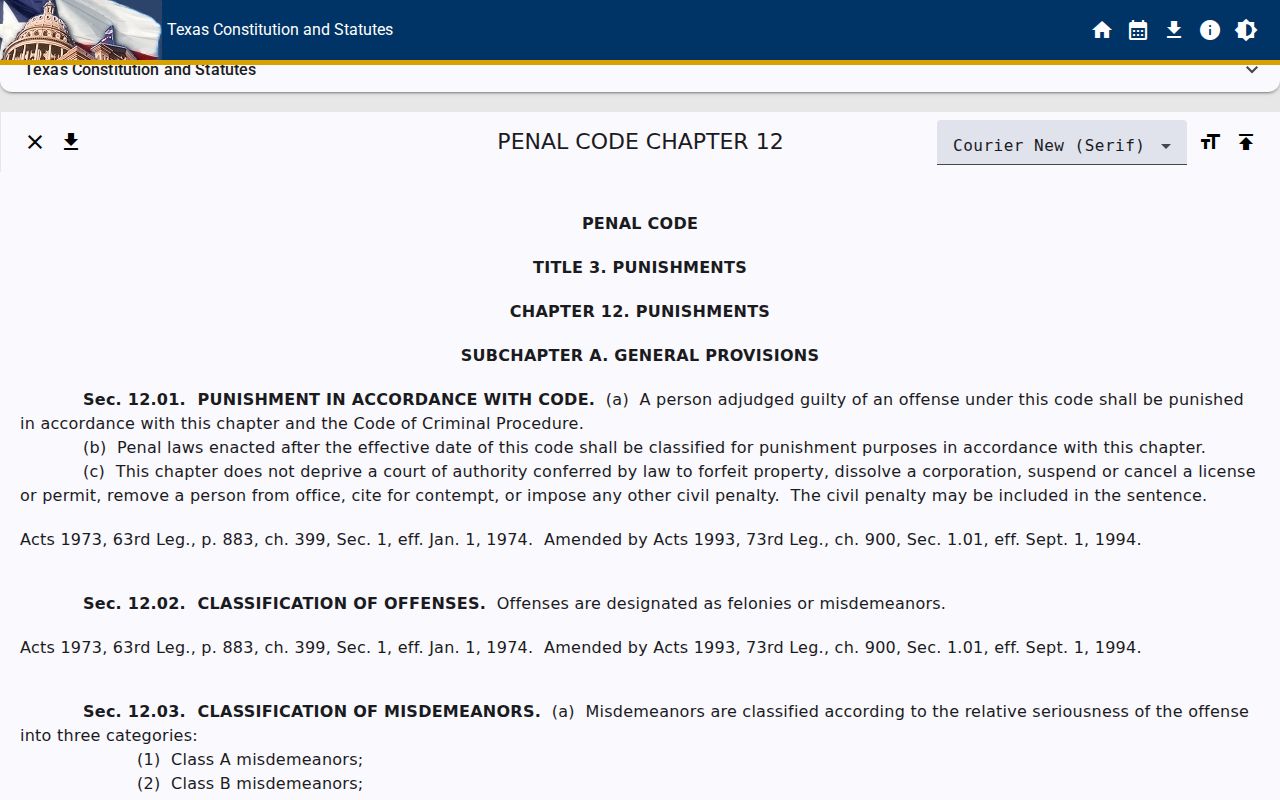
That law explains ranges, but the clerk's case file shows the charge actually filed and the court's final sentence.
- Complaint
- A sworn allegation that may support a charge or warrant.
- Information
- A prosecutor-filed charging instrument commonly used for misdemeanors.
- Indictment
- A grand jury's formal felony accusation.
- Disposition
- The recorded outcome of a charge or case.
- Deferred adjudication
- Community supervision while the court defers a final finding of guilt.
City-by-City Criminal Records in Jim Wells County
City police reports and municipal court files remain local even when a custodial arrest later enters the Jim Wells County jail. Alice offers an online municipal court search with six routes. Premont and Orange Grove have no verified public case-search portal, so their phone, email, mail, and counter channels matter. The three city record checks below match the incorporated-place ranking in the research.
The City of Alice official site is the main city directory for local police and court contacts.

Alice is also the county seat, but its city report and fine-only court records do not become county files merely because county offices are nearby.
Alice Record Check
Largest city and county seat, with an online municipal citation search and separate police-record route.
Premont Record Check
Direct police and municipal-court contacts at the city counter, with county dispatch overlap.
Orange Grove Record Check
Phone, email, mail, and counter access for municipal files, plus county routing for higher charges.
Jim Wells County Records Since 1911
Jim Wells County was created from Nueces County in 1911. Voters approved courthouse and jail bonds the next year, and more than 2,000 people attended the courthouse cornerstone ceremony on July 25, 1912. The building designed by Atlee B. Ayers later changed as the 1938 oil boom drove local growth. Remodeling in 1948 and 1949 and later annex construction help explain why today's public-record work is spread among suites and offices instead of one old courthouse window.
That history still shapes access. The courthouse at 200 N. Almond Street houses the District Clerk, County Clerk, judges, prosecutors, and county administration in different rooms. The sheriff and jail operate at 300 N. Cameron Street. Jim Wells County spans about 865 square miles, so telephone, mail, electronic, and counter routes all matter for people outside Alice. Confirm hours before travel, bring a cause number and full name, ask whether a file is electronic or archived, and obtain the current copy or certification quote.
Note: Court clerks can provide records and procedure details, but they cannot choose a remedy or give legal advice about a case.