
Jim Wells County Sex Offender Checks
The official starting point is the Texas Public Sex Offender Registry. Texas DPS compiles public registration information sent by local law-enforcement authorities. A county search can find public profiles associated with Jim Wells County, while a name search can help when the municipality or ZIP is uncertain. Neither method should be treated as a promise that an address has never changed. Search more than one spelling when an alias is known, and compare the profile rather than relying on a result-list name.
Local responsibility depends on residence. A person who lives within a municipality generally registers with that municipal police chief. Someone outside a municipality generally registers with the Jim Wells County Sheriff. The local authority verifies and transmits data, but DPS publishes the statewide public product. That split explains why a question about a Jim Wells County registry result may need both the listed registration authority and the DPS registry unit.
The captured official registry interface shows the public search before any person is selected.
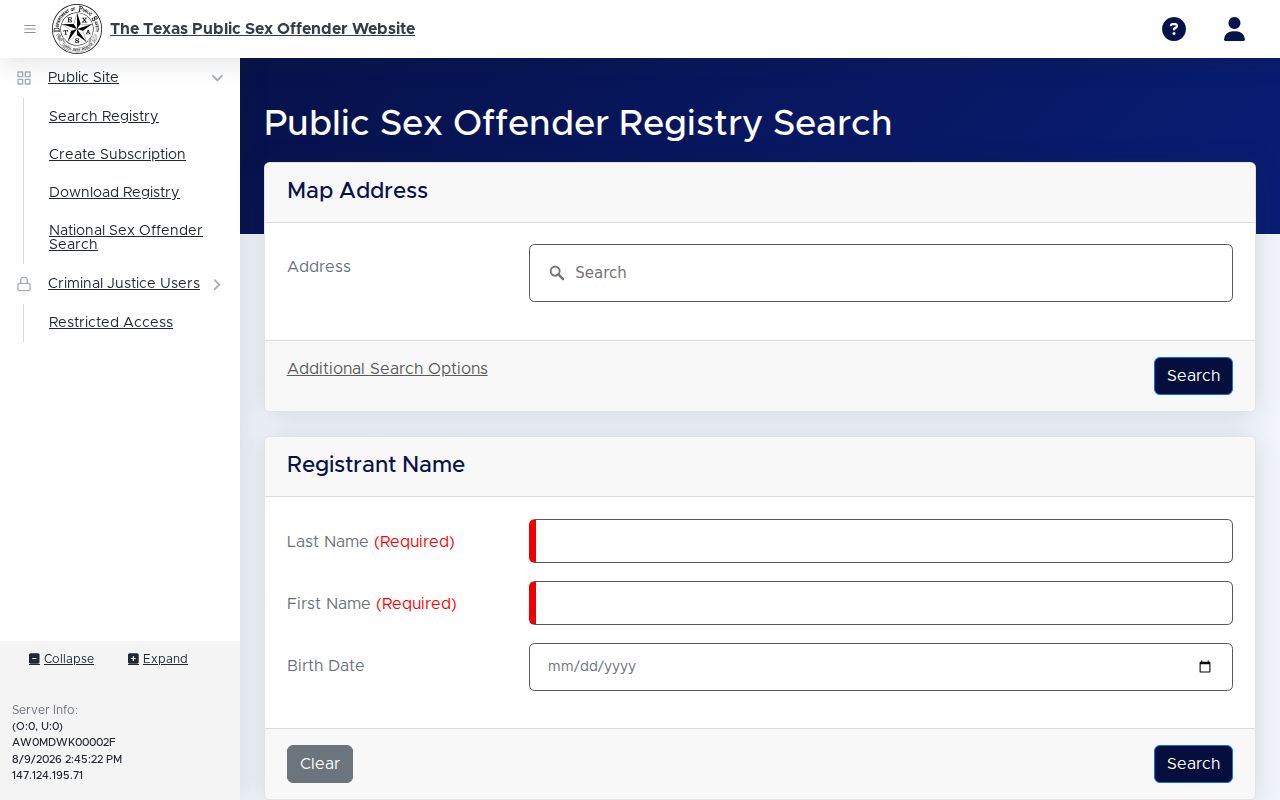
The image reinforces the safest first step: begin with a neutral search form, then open only the official public profile needed for community awareness.
Jim Wells County Registration Authorities
Registration is local even though the public registry is statewide. Alice and Premont residents generally report through the relevant police department. Registrants who live outside a municipality generally report through the Jim Wells County Sheriff. The profile's registration-authority field helps identify which office should receive an address or compliance question. It also prevents a common routing error: sending every concern to the sheriff solely because the result is in Jim Wells County.
Texas DPS describes the duties shared by registrants and local authorities in its Sex Offender Registration Program overview. Local staff collect required updates and send them to DPS. DPS then maintains the public system. The official program image provides context for that state and local chain.
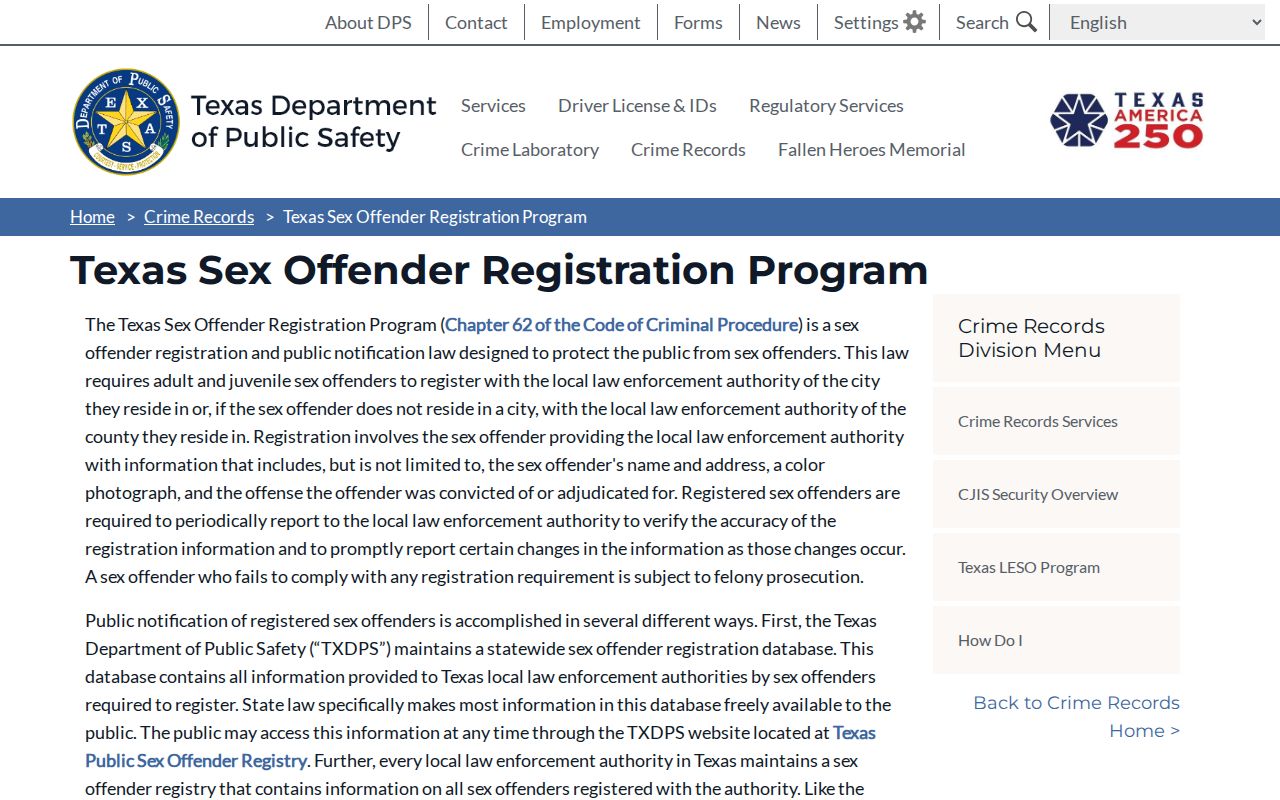
That chain matters when a public entry seems stale. Contact the authority named on the profile first, then use the DPS program contact if the issue concerns statewide publication. The City of Alice directory and the Jim Wells County directory provide official local starting points when the current registration office is unclear.
Note: The sheriff's mobile app advertises tips and safety news, but its store listing does not claim a registry search or alert feature.
Texas Public Sex Offender Registry Searches
The Texas registry offers several ways to narrow a Jim Wells County sex offender lookup. Use a known identifier when one is available. Otherwise, combine a name with geographic facts and check aliases shown on a possible profile. Current-address information can lag a reported move, so a map result is a lead to review, not a cue to confront anyone.
- Open the official Texas DPS registry and review its conditions of use.
- Choose the name search, the address and map path, or an identifier search.
- For a county view, select Jim Wells and add city or ZIP details when useful.
- Open the matching profile and compare aliases, physical details, registration authority, offense data, and status.
| Search path or field | Type | Required | Use |
|---|---|---|---|
| Name Search | Tab or form | Path choice | Starts a name-based lookup |
| Last and First Name | Text | Depends on path | Spelling and aliases can change results |
| Address or Map Search | Form and map | Path choice | Finds public records by location |
| Street, City, ZIP | Text | Depends on path | Narrows a geographic search |
| County | Dropdown | No | Select Jim Wells for county scope |
| SID or Identifier | Text | No | Useful when the official identifier is known |
Jim Wells County Registry Privacy Limits
A public registry record is detailed, but Texas law deliberately keeps certain fields out of view. The public does not receive a Social Security number, driver-license number, phone number, online identifier, employer-identifying or contact information, confidential data added by DPS, or the victim's identity. These limits protect sensitive facts while leaving the information that Chapter 62 makes public for safety awareness.
The boundary is important when comparing registry data with a criminal court file. A registry profile summarizes a reportable offense and registration duties. It is not the full police narrative, the full evidence file, or every part of the court docket. The Texas Sex Offender Registration Program statute, especially Article 62.005, controls public release. Requests for excluded fields do not become valid merely because the visible profile confirms a person's identity.
Public does not mean complete: Chapter 62 publishes defined safety information while withholding victim identity and other confidential personal data.
Registry Profiles: What They Show
Read the full Jim Wells County registry profile before drawing any conclusion. Public fields can distinguish people with similar names and show which authority maintains the registration. They also separate a risk label from the length of the registration duty. A photograph or mapped point alone does not provide that context.
| Name and Aliases | Current public name plus aliases reported for the registrant. |
|---|---|
| Photo and Description | Color photograph and public sex, race, height, weight, hair, eye, age, scar, mark, or tattoo details where shown. |
| Residence | Address or geographic residence description released under Texas law. |
| Offense | Reportable offense, statute, jurisdiction, conviction or adjudication date, punishment, and public victim-age category. |
| Risk and Status | Risk level, registration authority, verification information, compliance details, and end or lifetime indication where displayed. |
| Other Public Fields | Qualifying vehicle and supervision information when Chapter 62 requires publication. |
A registry profile should also be checked against its last available update and authority field. If the record seems inconsistent, preserve the profile URL and describe the exact field when contacting officials. Do not circulate an unverified claim.
Cross-State Registry Checks from Jim Wells County
A Texas search is not a national search. When a safety question crosses a state line, use the National Sex Offender Public Website maintained by the U.S. Department of Justice. NSOPW draws public information from participating jurisdictions and supplements the Texas registry. It does not replace the state profile, local registration authority, or direct reporting channel.
The official national registry landing page illustrates the separate cross-state layer available to Jim Wells County residents.
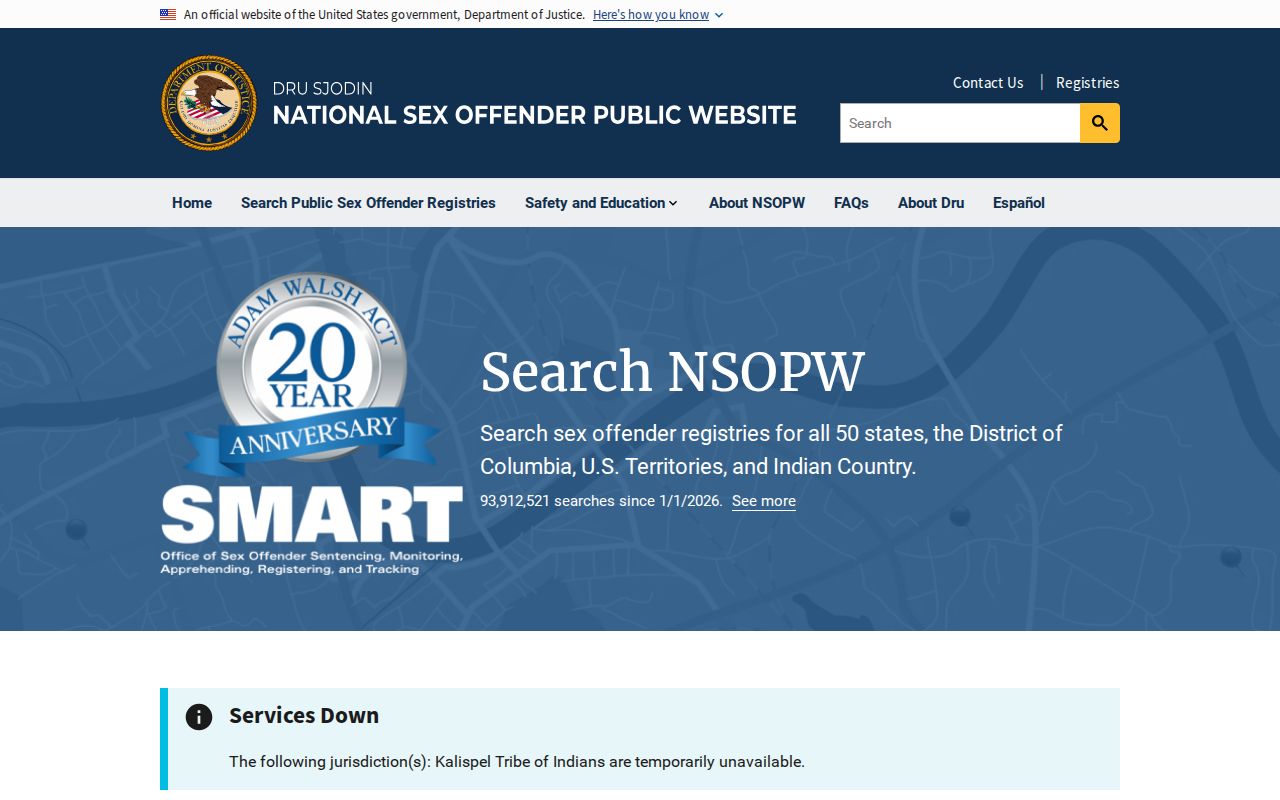
Use both systems when a person recently moved, an address sits near a state boundary in a broader search, or records from another jurisdiction appear in the Texas profile. Compare public identifiers carefully. A missing national result should not be treated as proof that no state record exists.
Registration Levels and Duties in Texas
Texas uses low, moderate, and high risk labels, and it identifies civil commitment separately. Those labels do not by themselves set the registration term. Adult registration is generally ten years after discharge or lifetime, depending on the reportable offense and history. Exact duties come from Chapter 62 and the individual record, not from a general assumption about the risk word shown.
| Public category or status | Duration | Verification framework | Public visibility |
|---|---|---|---|
| Low, moderate, or high risk | Generally ten years after discharge or life, based on offense and history | Schedule comes from Chapter 62, not the risk label alone | Risk label appears on the public profile |
| Two or more sexually violent offenses | As required by the underlying reportable history | Every 90 days | Public fields remain limited to those Chapter 62 permits |
| Civilly committed | Separate statutory status | Every 30 days | Civil commitment is separately identified |
The table avoids a false tier system. Texas risk labels, duration, and verification frequency answer different questions. Check the public profile, the official DPS program material, and Chapter 62 before describing someone's obligation.
The manifest includes the current Texas expunction chapter, which helps mark another legal boundary.
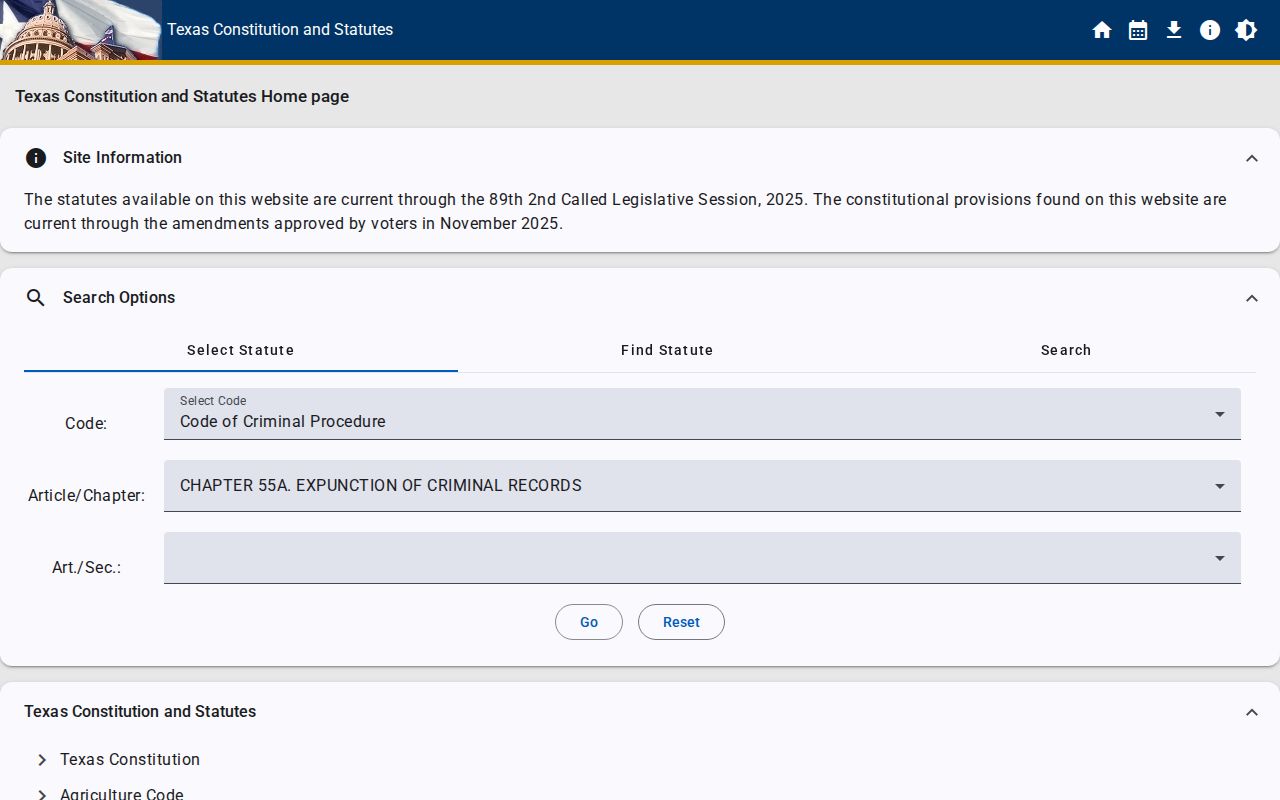
Expunction under Chapter 55A is a separate remedy for qualifying arrest records. It must not be confused with a Chapter 62 registration duty or assumed to remove a registry entry.
Jim Wells County Verification Schedules
Verification is the recurring local check-in tied to registration. Most schedules depend on the statutory category and individual history. Two or more sexually violent offenses call for verification every ninety days, while civilly committed persons verify every thirty days. Other duties are governed by Chapter 62. A public profile may display verification or compliance information, but a reader should not calculate a missed deadline without the full legal and reporting context. The DPS registry FAQ is the official state reference for program questions.
Community notification also differs from routine profile publication. Texas law may call for added notice in specified cases, including high-risk notice procedures, while the public registry remains available statewide. For Jim Wells County, the correct local authority is the police department for a municipal resident or the sheriff for a resident outside a municipality. Safety alerts and registry notices are not the same as crime statistics.
The official FBI Crime Data Explorer is a source for agency-level crime figures, not a person registry.
That distinction keeps broad reported-crime data from being misread as a list of registered people or as a measure of any individual's conduct.
Reporting Jim Wells County Registry Concerns
If a Jim Wells County registry address appears out of date, note the profile, the public field at issue, and the registration authority shown. Report the concern to that authority or to the Texas DPS Sex Offender Registry unit at 512-424-2800. Do not visit the address or attempt to investigate a person. Officials can compare the report with information that is not public and decide whether follow-up is needed.
Use emergency services only for an immediate threat. A suspected compliance issue is not proof of a new crime, and a map marker that appears misplaced may reflect reporting or display timing. The same care applies when a profile shows community supervision or prior custody. The Texas Board of Pardons and Paroles concerns parole decisions, not local registry corrections.
The parole authority image underlines the routing rule: registration questions go to the listed law-enforcement authority or DPS, not to an unrelated state office.
Note: Report facts through official channels and allow trained personnel to verify compliance.
Using Registry Information Lawfully
Jim Wells County registry information supports personal, family, and community safety. It can help residents understand public location data, plan a calm conversation about safety, or give officials a precise report about a suspected error. It does not authorize harassment, threats, vigilantism, or unlawful discrimination. The profile may also be incomplete or no longer current, so the originating authority remains the source for verification.
Keep the search within the public purpose of Chapter 62. Share only what is needed for a legitimate safety concern, preserve the official source, and avoid claims that go beyond the record. Never confront a registrant or household. A public profile records a legal registration status and public facts; it is not permission to punish someone outside the justice process.
Misuse is prohibited: Texas Code of Criminal Procedure Chapter 62 warns against using registry information to injure, harass, or commit a crime against a registrant or household. Report concerns to law enforcement instead.